

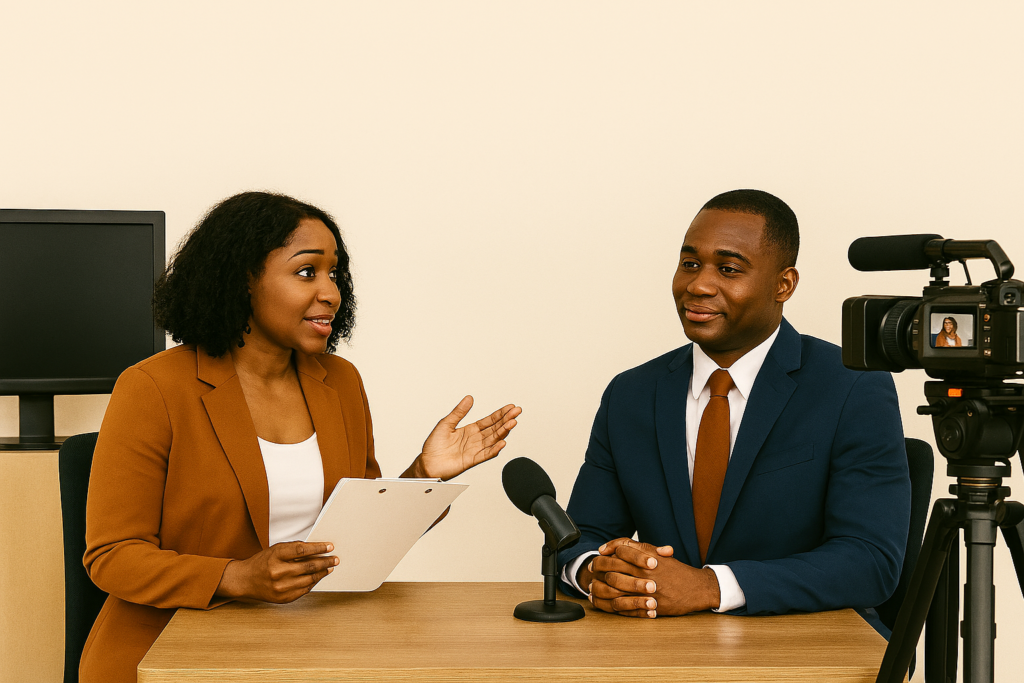
TV interviews in Nigeria or anywhere in the world are delicate moments. Whether you’re a business leader, public official, NGO spokesperson, or celebrity, those few minutes on air can shape public perception, influence trust, and determine how your message is received. Yet many guests walk into the studio unprepared. Because we all have conversations, most people underestimate the need for proper preparation before interviews, ignoring the structure, pace, and expectations of a professional interview environment.
This guide breaks down everything you need to know to prepare effectively for a TV interview in Nigeria – from understanding the media landscape to mastering your delivery.
Why TV Interview Preparation Matters in Nigeria
Nigeria’s media environment is fast, competitive, and unforgiving. A single misstep can go viral within minutes. Recent commentary from communication professionals highlights that many interviewees struggle because they fail to research the programme, anticipate questions, or practise their delivery.
Preparation is the difference between controlling your narrative or being controlled by your emotions or impulses. To the following to be adequately prepared:
1. Understand the Programme and the Host: Before stepping into the studio, research the show you’re appearing on. This helps you tailor your tone, examples, and message. Look out for:
- The host’s interviewing style. Is the host conversational, confrontational or analytical?
- The typical audience – youth, business or policymakers?
- The show’s format: is it a panel, one-on-one, debate, or news analysis?
This context shapes how you prepare and how you deliver your message.
2. Clarify Your Objective: Every interview should have a purpose. Are you:
- explaining a policy?
- responding to a crisis?
- promoting a product or initiative?
- correcting misinformation?
If the interview was at your request, then your objective should already be clear. If you were invited as a guest or commentator, you should also ask the interviewer what they’re seeking to achieve. Knowing your objective helps you stay focused and avoid rambling – a common pitfall noted in media training insights.
3. Prepare Your Key Messages: As you prepare for a TV interview, identify 2–3 key points you want the audience to remember. These should be clear, concise and repeatable. Media trainers consistently emphasise the importance of developing memorable talking points and bridging back to them when questions drift off‑course.
4. Practise with Mock Interviews: Rehearsal is one of the most effective ways to build confidence. You could record yourself and review your clarity, tone, and pacing. Practise expected questions, tough or uncomfortable questions, short, crisp answers and staying calm under pressure. If possible, work with a media trainer who can simulate real studio conditions.
5. Master Your On-camera Presence: TV is a visual medium. Your body language communicates as loudly as your words. Nonverbal communication significantly influences how you’re perceived on air, so focus on:
- posture: sit upright, avoid slouching
- eye contact: look at the interviewer, not the camera
- hand gestures: use controlled gestures to avoid distracting the audience
- facial expression: calm, confident, engaged. Wear a smile where appropriate.
6. Dress for the Camera: Your outfit should support your message, not detract from it. This is especially important in a crisis. In general, avoid busy patterns or overly bright colours, choose solid, camera-friendly tones, and ensure your outfit contrasts with the studio background. Also, keep accessories and makeup minimal. These rules previously applied to television interviews, but remember that many radio stations now livestream interviews, so appearance now matters for radio, too. Likewise, podcasts.
7. Arrive Early and Get Comfortable: Arriving early is another overlooked way to prepare for a TV interview. It helps you to settle your nerves, understand the studio layout, meet the host and producers and clarify last-minute details. An early arrival also allows you to build rapport with the production team, which can improve your comfort level on air. The international best practice is to arrive 1 hour before the interview, but in Nigeria, 30-minutes should do.
8. Stay Calm, Composed, and Authentic: Even when questions get tough, maintain composure. Audiences appreciate sincerity over perfection. Remember to:
- pause before answering if needed
- avoid jargon
- speak in relatable language
- stay on message without sounding evasive
Authenticity builds trust, which is a key ingredient in Nigerian media culture.
9. Use the Bridging Technique: If a question doesn’t align with your key message, use bridging phrases such as:
- ‘What’s important to note is…’
- ‘Let me clarify that…’
- ‘The key point here is…’
This keeps you in control of the narrative while still respecting the interviewer.
10. Avoid Common Mistakes: Many interviewees fall into predictable traps by rambling, being defensive, speaking too fast, ignoring the audience and over-explaining. Awareness helps you avoid them.
A TV interview is an opportunity for executive visibility. With the right preparation, you can communicate confidently, protect your reputation, and deliver your message with impact. As media experts in Nigeria continue to highlight, preparation is the foundation of a successful on‑air presence.
If your organisation needs a properly designed, practical media training to prepare leaders for interviews, Brand Spark offers tailored coaching designed for Nigerian executives and public figures.