

A journalist offered to write a news story for my upcoming PR training, so I sent her a press release. She responded, stating it would be stronger if it began with a statement from me – she wanted me to comment on the recent crisis faced by Nigerian celebrities and social media influencers to make it more newsworthy. If you read my book, How to Build a Successful Public Relations Career in Nigeria, you’ll understand the criteria for newsworthiness.
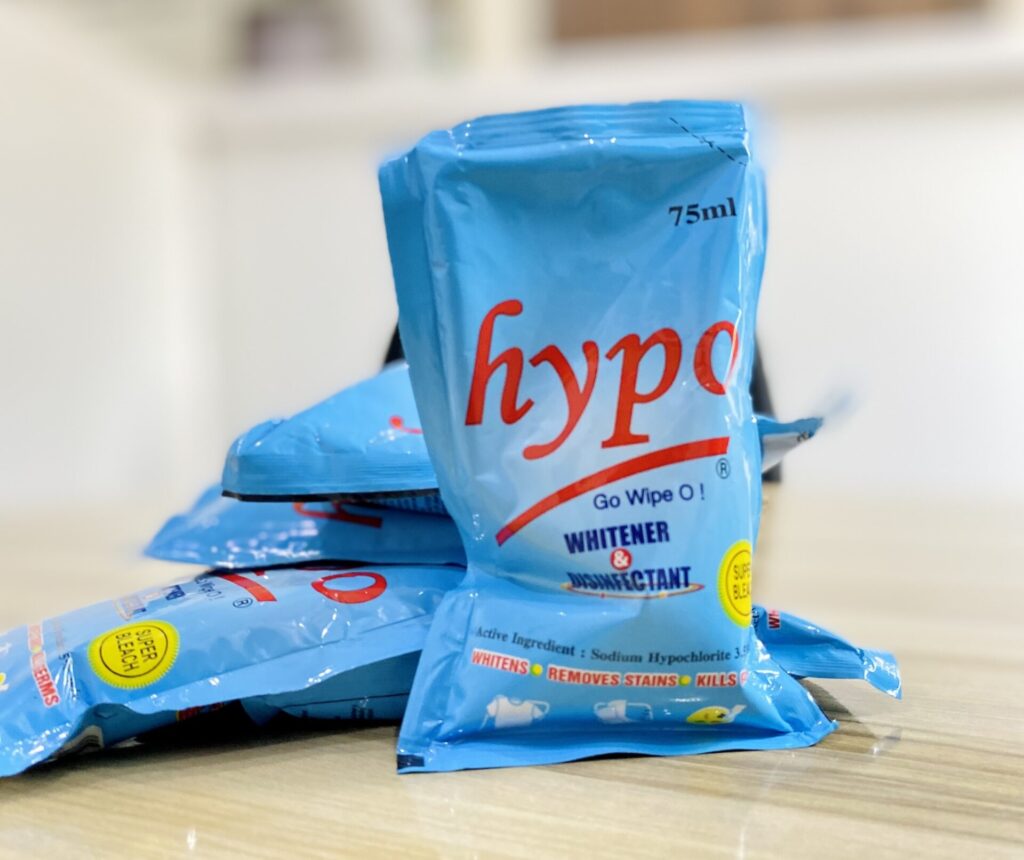
As I contemplated my response, I began analysing the King Mitchy vis-à-vis the Hypo Bleach trend issue. Before I share my thoughts, there have been calls by some practitioners to drop the ‘Public Relations’ moniker and replace it with ‘Communications’. My argument in my book is that ‘Communications’ may not carry the same weight as PR, as it may be reduced to the dissemination of information. I also write that sometimes, in PR, the solution to a crisis is not always more communication, but legal or regulatory, as presented in this Hypo Bleach issue.
Regarding the trend misrepresenting Hypo Bleach as a drink, I see several issues:
Reputation management: I first read a news report that King Mitchy was dead. Then, a later report revealed that a statement from her management confirmed she was taken to a certain hospital and was recovering. According to the news report, the hospital has denied that she was admitted to their facility and threatened legal action. If the hospital was indeed falsely named, they are well within their rights to demand legal action. If King Mitchy was indeed admitted to the hospital and they’re adopting ‘denial’ as their crisis response strategy, then the hospital could face reputational damage.
Some Nigerians may choose to frame King Mitchy’s actions as a publicity stunt. That is not a publicity stunt. That thinking would reflect a misunderstanding of PR principles.
Clickbaiting and clout-chasing: I have seen some very harmful and disturbing videos from clout-chasers on social media. I cannot understand why anyone would do that to go viral, so I would assume that they don’t understand the consequences of their actions.
Now, to the handling of the issue. There are several dimensions.
Initial Response
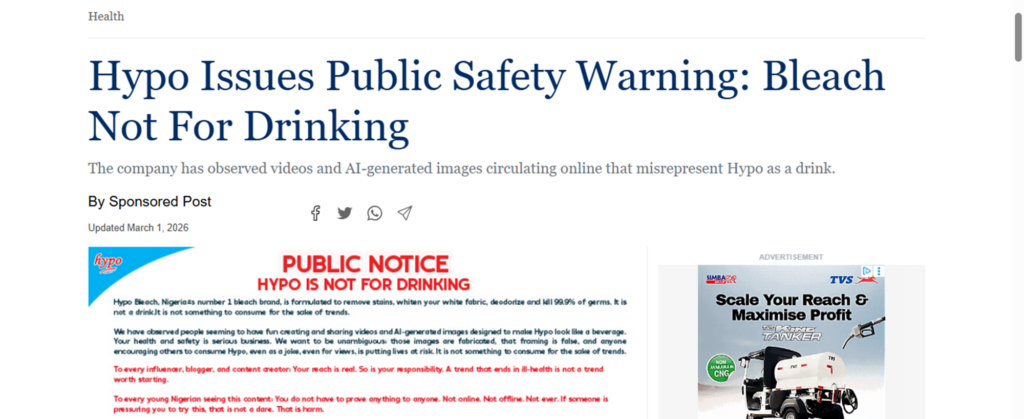
Hypo has issued a holding statement, a good first move, but more on that later. There’s also an educational video on Instagram emphasising that Hypo is not a drink.
Media Monitoring
After the initial response, if Hypo does not have a media monitoring agency, they should engage one to track coverage online and offline, and analyse it to inform further action. It’s important to know who is talking, what they’re saying and who’s listening to them.
Stakeholder Engagement
When I teach stakeholder mapping, I often stress that the stakeholder map is neither generic nor static. It is dynamic. The influence of stakeholders can change depending on the issue or event being managed. The influencers involved in this issue hold a lot of power, so it demands influencer relations. A holding statement that reads in part, ‘To every influencer, blogger and content creator, your reach is real. So is your responsibility. A trend that ends in ill-health is not a trend worth starting,’ is insufficient. One engagement strategy could be to educate influencers on responsible digital behaviour.
Also, beyond the holding statement, the issue presents an opportunity for Hypo to engage in mental health advocacy. This can take many forms through collaborations and education.
Media Relations
The ‘sponsored post’ tag on the Channels TV website suggests that Hypo had to pay for its holding statement to be published on some platforms. It is disheartening that this happens in Nigeria. It would be unheard of to pay for such stories in some other climes. Ideally, there’s nothing promotional about a holding statement except that the writer of this one began with the phrase: ‘Hypo Bleach, Nigeria’s number 1 bleach brand…’. This is why I dedicated one and a half chapters of my PR book to addressing the complexities of media relations in Nigeria.
What unfolded with the King Mitchy and Hypo Bleach Trend is one that the brand could not have easily anticipated. This shows that in the age of artificial intelligence, business risks will be heightened, and crisis management could become more complex. Risk assessment must therefore take a whole new dimension.