

When US President Donald Trump moved to freeze and cut foreign aid, the consequences reverberated across Africa’s development sector. The disruption to US foreign assistance, including the dismantling of USAID and the cancellation of numerous aid programmes, left NGOs and implementing partners confronting funding uncertainty, operational disruptions and difficult questions about sustainability.
For many NGOs, securing funding has become an even more pressing challenge. With traditional funding streams under pressure, competition for grants and philanthropic support is intensifying, while donors face growing pressure to demonstrate that their resources are delivering measurable results. Organisations can no longer rely on the importance of their missions alone. They must show why their work deserves continued investment.
In this environment, trust is a strategic asset. Donors want evidence that their contributions are making a difference. Communities want to know that interventions address their actual needs. Development partners want confidence that organisations can deliver on their commitments. And corporate sponsors want to understand the social value and credibility of the initiatives they support.
Annual reports, financial statements and monitoring and evaluation data remain essential to demonstrating accountability. But numbers alone do not always convey the human realities behind a programme or help stakeholders appreciate the difference an intervention makes. This is where documentary production becomes particularly valuable.
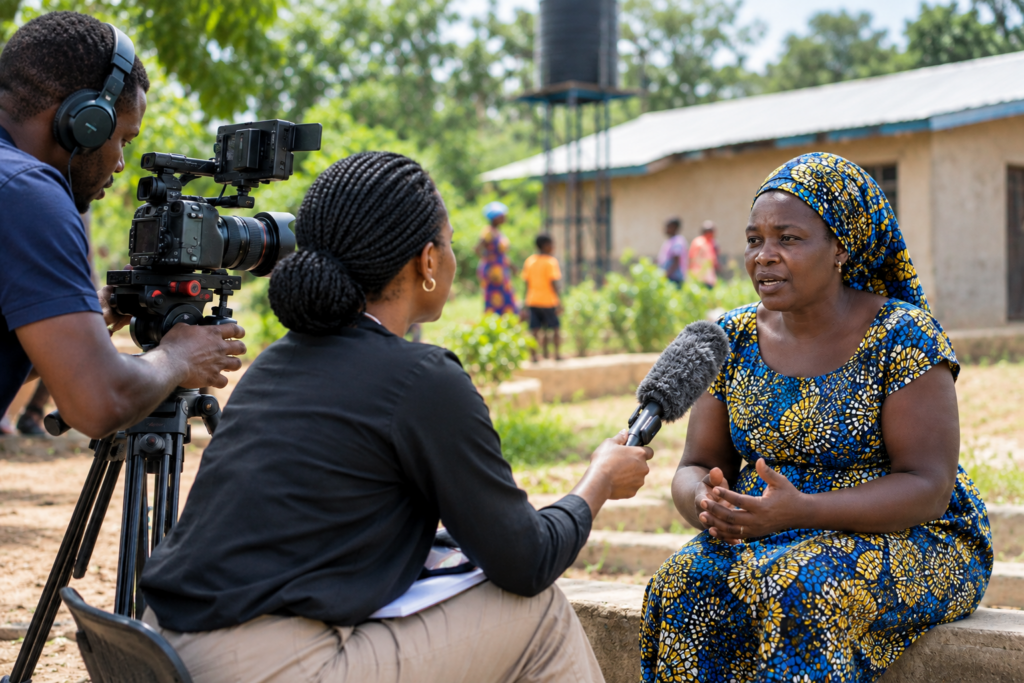
A documentary brings evidence to life through authentic human experiences, compelling narratives and verifiable outcomes. It allows NGOs to show not just what they do, but its importance, whom it serves and what it is achieving. For multinational companies, documentaries provide a similar opportunity to demonstrate the substance behind their corporate social responsibility, sustainability and community investment commitments.
The question, therefore, is not simply whether your organisation has a compelling story to tell. It is whether you are telling that story in a way that earns stakeholder confidence.
At Brand Spark, we believe creative storytelling and documentary production can make a meaningful difference.
Five Ways Documentaries Build Stakeholder Trust
They make organisation impact visible
Many organisations undertake valuable work that stakeholders never fully see or understand. Annual reports, presentations and press releases may contain important information, but their impact can be limited when audiences struggle to connect figures with real-world experiences. A documentary bridges this gap by bringing evidence and human stories together. For an NGO, this could mean showing how an education intervention has affected learners, teachers and families. For a multinational, it could mean documenting how a local supplier development initiative has helped small businesses improve their operations.
They humanise the organisation behind the brand
Organisations are often perceived through their logos, executives, products and official statements. Documentaries introduce another dimension: the people whose lives and work are connected to the organisation. These may include beneficiaries, employees, community leaders, business partners, volunteers, suppliers or customers. Their experiences can provide a more relatable account of an organisation’s work than corporate messaging alone. Consider a multinational operating in several African markets. A documentary about its local economic contribution could feature small-business owners in its supply chain, employees who have developed new skills and community members affected by its investments. Human-centred storytelling makes organisational commitments more relatable and gives stakeholders a clearer understanding of the people affected by its decisions.
They demonstrate transparency and accountability
Trust is not built by presenting only favourable information. It also depends on an organisation’s willingness to explain its decisions, acknowledge challenges and demonstrate what it is doing to improve. Documentaries can create opportunities to explore the context surrounding a project, including the problems it was designed to address, the obstacles encountered and the lessons learned. For NGOs, this is particularly important when communicating with donors and development partners who need to understand how resources are being used and whether interventions are achieving their intended outcomes. For multinationals, documentaries can help explain complex initiatives involving environmental sustainability, supply chains, workforce development or community relations. A credible documentary should not disguise shortcomings or substitute emotional storytelling for evidence. Instead, it should place achievements and challenges within an honest account of the organisation’s work.
They create a shared understanding among diverse stakeholders
Large organisations often communicate with audiences who have different interests, expectations and levels of familiarity with their work. An NGO may need to engage donors, government agencies, beneficiaries, implementing partners and the wider public. A multinational may need to communicate with employees, investors, regulators, customers, suppliers and host communities. These audiences may interpret the same initiative differently. A documentary can provide a shared reference point by explaining the organisation’s objectives, activities, results and stakeholder experiences in an accessible format. It can also bring forward perspectives that might otherwise be overlooked, helping decision-makers and audiences understand the wider implications of an initiative. When strategically distributed, the same documentary can support stakeholder meetings, donor presentations, internal communications, public engagement, conferences and digital campaigns. A common narrative can reduce misunderstanding, encourage constructive dialogue and help stakeholders make better-informed judgements.
They provide lasting evidence of an organisation’s commitments
Trust develops over time. It is reinforced when an organisation’s words, actions and results remain consistent. Documentaries can become part of an organisation’s longer-term record of its programmes, investments, milestones and stakeholder relationships. For an NGO, an impact documentary can document the progress of a multi-year development programme. For a multinational, a corporate documentary can capture a significant sustainability initiative, a local investment or the evolution of a community partnership. Such films can be revisited, shared with new stakeholders and incorporated into future communications, provided their claims remain accurate and relevant. Documentaries can support continuity in stakeholder communication and provide a useful record against which future commitments and progress can be discussed.
Choosing the Right Documentary Production Partner
Selecting a documentary production company requires more than reviewing its showreel or comparing filming costs. NGOs and multinationals should consider whether the prospective partner understands the communication challenge, can work with multiple stakeholders and has the capacity to translate complex subject matter into an engaging, evidence-based narrative.
Before commissioning a project, consider asking the following questions:
- Does the production team understand corporate communication, stakeholder engagement or development communication?
- Can it research and develop a story rather than simply film an event or follow a supplied script?
- How does it verify facts and handle sensitive or contested information?
- What processes does it use to obtain consent and protect participants?
- Can it produce versions suitable for websites, presentations, social media, donor meetings and other channels?
- How will the documentary’s performance be evaluated against the organisation’s communication objectives?
The ideal partner combines creative storytelling with strategic thinking, professional production capabilities and a clear understanding of reputation, accountability and stakeholder relationships.
For organisations whose credibility depends on demonstrating meaningful outcomes, this combination is particularly important.
Looking for documentary production services for your NGO or multinational? Contact Brand Spark to discuss how strategic storytelling can help your organisation document its work, communicate its impact and strengthen stakeholder trust.
Visit www.thebrandsparks.com to learn more about Brand Spark.
Frequently Asked Questions (FAQs)
1. How do documentaries help build stakeholder trust?
Documentaries help build stakeholder trust by presenting authentic experiences, verifiable information and real-world examples of an organisation’s activities and outcomes. They can make complex initiatives easier to understand, demonstrate accountability and give stakeholders a clearer view of how an organisation’s commitments relate to its actions. Their effectiveness depends on factual accuracy, ethical storytelling and consistency with the organisation’s actual conduct.
2. Why do NGOs need documentary production services?
NGOs use documentary production services to communicate programme impact, document development initiatives, demonstrate accountability to donors and funding partners, share beneficiary experiences and support advocacy. A well-planned NGO documentary can also be used in fundraising presentations, stakeholder meetings, annual reports, websites and digital campaigns. Claims about programme outcomes should be supported by appropriate monitoring and evaluation evidence.
3. What is the difference between a corporate documentary and a corporate promotional video?
A corporate documentary generally focuses on real people, events, experiences and evidence to explain an organisation’s work or explore an issue. A corporate promotional video typically has a more direct marketing objective, such as promoting a product, service or brand. Although the formats can overlap, documentaries usually allow more room for context, stakeholder perspectives and a deeper exploration of the subject.
4. How can multinational companies use CSR documentaries to improve corporate reputation?
Multinational companies can use CSR documentaries to document social investments, sustainability initiatives, community partnerships and employee development programmes. By combining relevant evidence with authentic stakeholder perspectives, these films can help audiences understand the purpose and outcomes of corporate initiatives. To protect credibility, CSR documentaries should present accurate information, avoid exaggerated impact claims and reflect the company’s actual practices.
5. How much does documentary production cost for an NGO or multinational?
The cost of documentary production depends on the project’s scope, research requirements, duration, filming locations, number of interviews, equipment, crew size, editing complexity, translation needs and distribution formats. International or multi-location productions may require additional travel, logistics and coordination. NGOs and multinational companies should request a detailed production proposal that specifies deliverables, timelines, usage rights and all associated costs.