

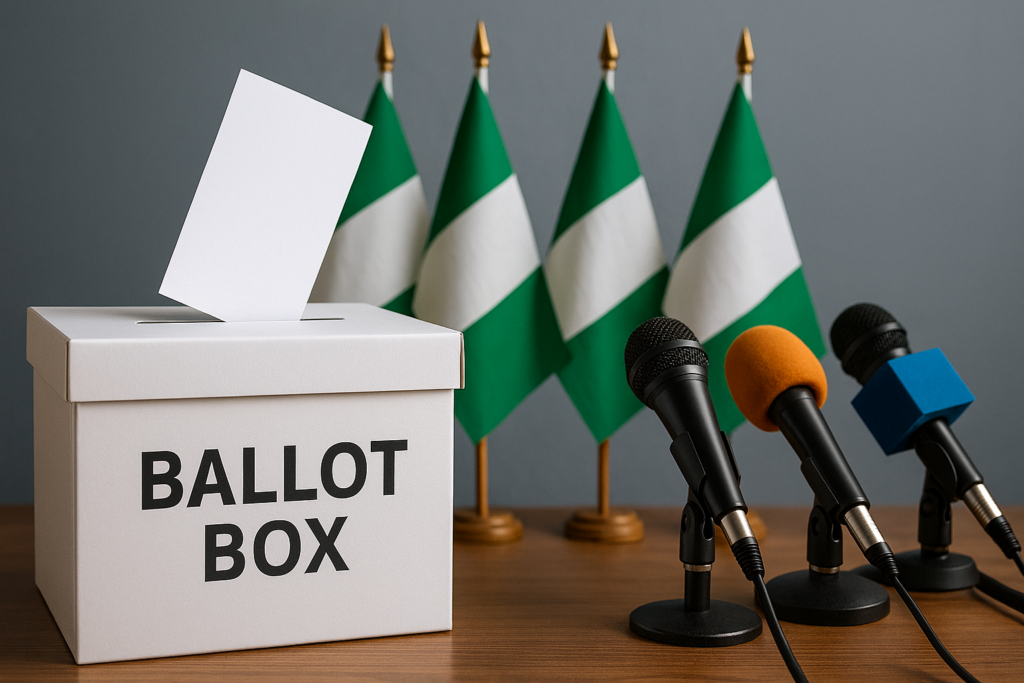
It’s 2026. New political parties are gaining ground, politicians are cross-carpeting at record speed, and opposition battles are gearing up to become loud, emotional, and fierce. As always, Nigerians will call for civility – urging politicians to focus on issues rather than personal attacks. Yet many will ignore this call, not necessarily out of malice, but because they misunderstand a fundamental truth: media messaging isn’t about speaking the loudest, but about being remembered.
At Brand Spark, we study these patterns closely because they reveal powerful lessons for leaders, brands, and spokespeople navigating today’s media landscape. Electioneering is, in many ways, the ultimate stress test for communication strategy. And Nigerian politicians who master these principles will stand out in an increasingly competitive arena.
Message discipline is more powerful than volume
Nigerian politics often rewards noise – long speeches, fiery rhetoric, and endless interviews. But effective electioneering rewards discipline. A politician who can articulate a clear, consistent message will always outperform one who tries to say everything at once. Message discipline means:
- Knowing your core narrative
- Repeating it across every platform
- Avoiding distractions that dilute your identity
Think about this: how many campaign messages and slogans do you remember from the 2023 elections?
There’s a place for emotional messaging
By this, I do not mean personal attacks, but stories. Nigerians respond to stories. Campaigns that rely solely on data, achievements, or policy documents often fail to connect emotionally. Effective political messaging taps into
- Hope – President Bola Tinubu’s ‘Renewed Hope Agenda’ and Gbadebo Rhodes-Vivour’s ‘The Architect of a New Lagos’
- Frustration – Gbadebo Rhodes-Vivour’s ‘Eko e Dide’, meaning to ‘Lagos, Get Up’.
- Pride – Babajide Sanwo-Olu’s ‘A Greater Lagos Rising’
- Shared struggle – Abdul-Azeez ‘Jandor’ Adediran’s ‘JafunEko’ (‘Fight for Lagos’)
- A vision of what could be – Peter Obi’s ‘A New Nigeria is Possible’
Emotional messaging is not manipulation. Rather, it acknowledges the lived reality of voters.
Attack messaging is a strategy, not a reflex
Yes, an attack message can be a strategy, but it’s not what you’re thinking. Personal attacks dominate Nigerian politics because they generate instant attention. But attention is not the same as persuasion. Politicians need to understand:
- Attack messaging must be strategic, not impulsive
- Overuse of negativity erodes credibility
- Issue-based contrasts are more effective than personal insults
During the 2023 town halls and debates, several heated clashes went viral, not because of the issues discussed, but because candidates lost composure. Those moments overshadowed their policy points and became the story. A well-timed and well-framed critique can shift public perception. A reckless one can backfire instantly.
Media platforms require different communication styles
A radio interview in Kano is not the same as an X Space with young voters or a TV debate in Lagos. Yet many politicians use the same tone, structure, and talking points everywhere. Effective communicators adapt by:
- Simplifying messages for radio
- Using conversational language on social media
- Bringing clarity and composure to TV
- Showing empathy in community engagements
The message stays the same, but the delivery must evolve.
Silence is also a communication strategy
In Nigerian politics, silence is often interpreted as weakness. But in media strategy, silence can be a powerful choice. Knowing when not to respond can prevent escalation, avoid fuelling false narratives, signal confidence and allow your message to stay in focus. Not every provocation deserves a reply.
Credibility is built long before election season
Electioneering doesn’t start when INEC releases the timetable. It starts years earlier, in how politicians communicate, show up, and build trust. Credibility is shaped by consistency in public statements, transparency during crises, respect for institutions and a track record of responsible communication. In 2023, several spokespersons made statements that contradicted their candidate’s earlier positions. These contradictions became news stories themselves, proving that credibility is not just about the candidate; the entire communication ecosystem must be aligned. A politician who only becomes ‘media conscious’ during campaigns is already behind.
Authenticity is a differentiator
Nigerians have a sharp radar for insincerity. They can tell when a politician is performing rather than speaking from conviction. Authenticity doesn’t mean being unfiltered; it means being clear about your values, honest about your limitations, human in your delivery and consistent in your tone. Authentic politicians don’t need to shout because their message carries its own weight.
As the 2027 elections approach, the political landscape will only grow more competitive. The politicians who succeed will not be the loudest, but the most strategic. Electioneering requires effective communication under pressure, and those who master media messaging will shape the narrative, influence public perception, and connect better with voters.
At Brand Spark, we help leaders and public figures to build credibility long before elections. Send us an email at hello@thebrandsparks.com